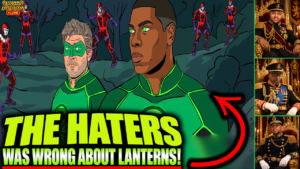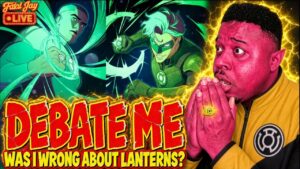

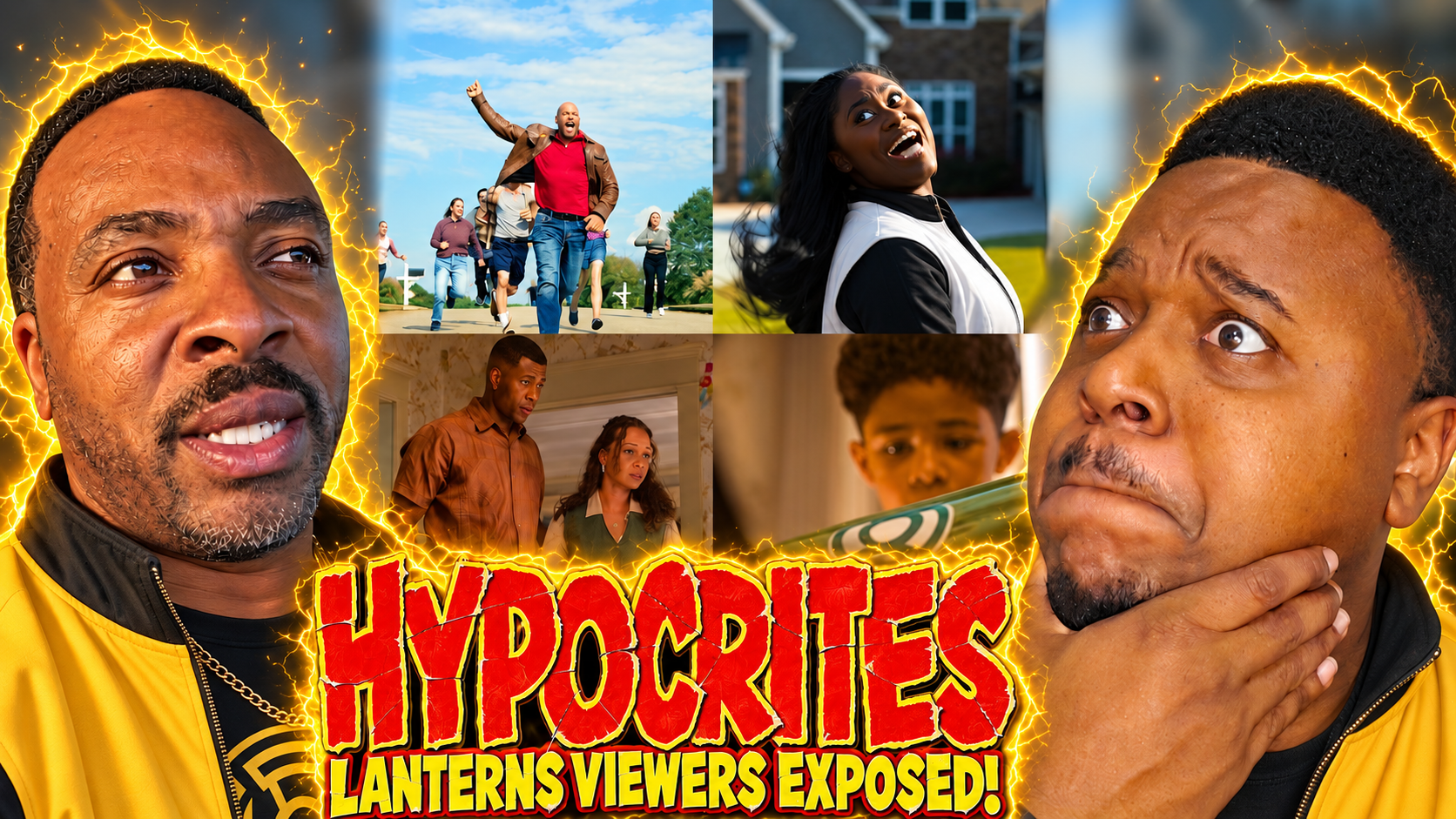
Ladies and gentlemen, everybody has a pitchfork out over Lanterns Episode 3. John Stewart’s origin, his parents, Hal Jordan, the conversations about race—pick something, and somebody is mad about it.
But I’ve got a question: are we criticizing what the show is doing, or are some people upset because they recognize what it’s saying?
My Lanterns 1×3 reaction is mixed, but I’m interested. Some of the family conversations felt familiar to me. I did not like the apple-shooting scene. Episode 2 was too slow for my taste. And I still want to know what the Guardians are planning for Hal Jordan and John Stewart.
That’s where I stood when Supasly75 and I got into this discussion. I’m a Snyder fan. I have plenty of problems with James Gunn’s DCU. But this show has my attention, and I’m going to be honest about that, too.
Is Lanterns Episode 3 Woke, or Is It Showing Something Familiar?
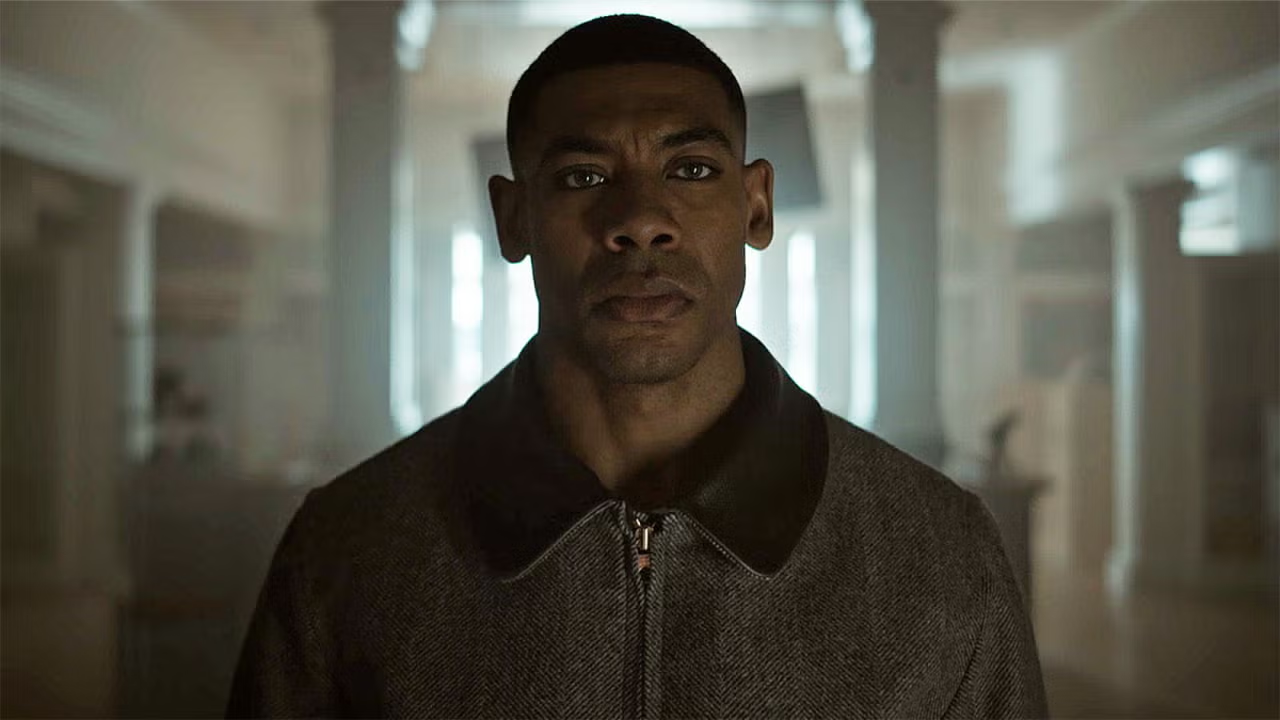
The family conversations were one of the biggest reasons this episode interested me. When the characters started talking about race, how they spoke, and how other people might see them, I recognized parts of it.
Take the conversation about somebody “talking white.” We’ve heard that before. You visit relatives, somebody comes from a different part of the country, and suddenly everybody has something to say about the way you talk.
That kind of exchange didn’t feel like it came out of nowhere to me.
Neither did a parent warning a child that the world might treat him differently. I heard those conversations growing up. Sly connected the subject to conversations he has had as a parent, too.
We were also talking about how different people’s experiences can be. There isn’t one upbringing that explains every Black household. A scene can connect with my life without representing everybody’s life.
But if I recognize something, I’m not going to pretend I don’t just because it makes somebody uncomfortable. Criticize the dialogue, the delivery, or how it fits the episode. We can have that conversation. Acting like these discussions never happen is where you lose me.
John Stewart’s Parents: I Still Don’t Like That Apple Scene
Let me be clear about this part: recognizing a conversation does not mean I approve of everything these parents do.
My daddy wasn’t shooting apples off my head. That was not my childhood.
Even with John bringing up the William Tell idea in the scene we discussed, I still didn’t like it. He is the child. The adults have a responsibility to make a better decision.
That’s one reason I couldn’t put the entire family storyline into a simple “good” or “bad” box. Some of the dialogue connected with me. The extreme training did not.
Sly also pushed back on the idea of forcing a child into greatness through harmful treatment. We could watch the episode, find things to discuss, and still reject that behavior.
I needed to understand what the show wanted us to take from it. Were these parents preparing a future hero, or were they creating problems he would have to work through? The answer matters to how this version of John Stewart develops.
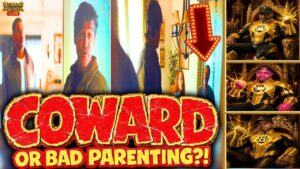
Why Was John’s Mother So Hard on His Father?
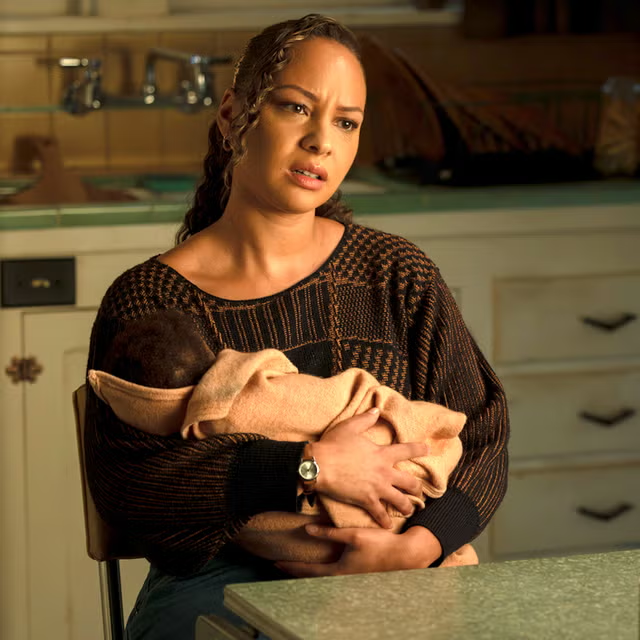
The relationship between John Stewart’s mother and father had me scratching my head.
I kept asking why she seemed to look down on him so much. Was she treating his fear as weakness? Was there something else in their relationship that I hadn’t fully understood?
Because let me tell you something: if an alien appears in my bedroom in the middle of the night and asks whether I’m afraid, yes, sir, I’m afraid.
Give me a second. I was asleep. I don’t know what this thing wants.
That reaction did not automatically make the father a coward to me. I also questioned the contrast between the harder impression he gave earlier and the way the family dynamic played out here.
Then the mother seemed calmer later, especially around the art-school conversation. Was that a sign she realized she had pushed too hard? Was it supposed to be a redemptive moment?
Sly offered another possibility: maybe she knew more about the alien contact and John’s future than she was letting on. That was his theory. I hadn’t settled on an explanation.
Those questions are part of why I’m still watching. I want the story to connect those pieces.
John Stewart’s Green Lantern Origin: What Caught My Attention
Sly questioned the reimagining of John’s backstory. My reaction was that the episode still appeared to be drawing on different parts of the character we were discussing.
The drawing and art-school material stood out to me alongside the military background. I saw a connection to John’s architecture roots in the comics, even though the family story and the route into becoming a Lantern were taking a different shape.
I’m a DC fan, and I own some Green Lantern comics. I also said I’m not as deep into Green Lantern lore as some dedicated readers. That may be part of why I’m more willing to follow this version and see where it goes.
That doesn’t mean every change works. It means I’m asking whether the story works on its own terms as well as considering what it changes.
If somebody knows the character inside out and has a specific criticism, explain it. Tell me what was lost and why it matters. That gives us something better to discuss than shouting “trash” at each other.
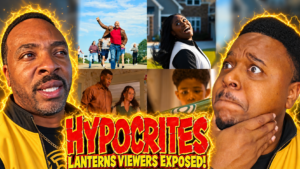
Fandom Exposed: Why I Question Some of the Backlash
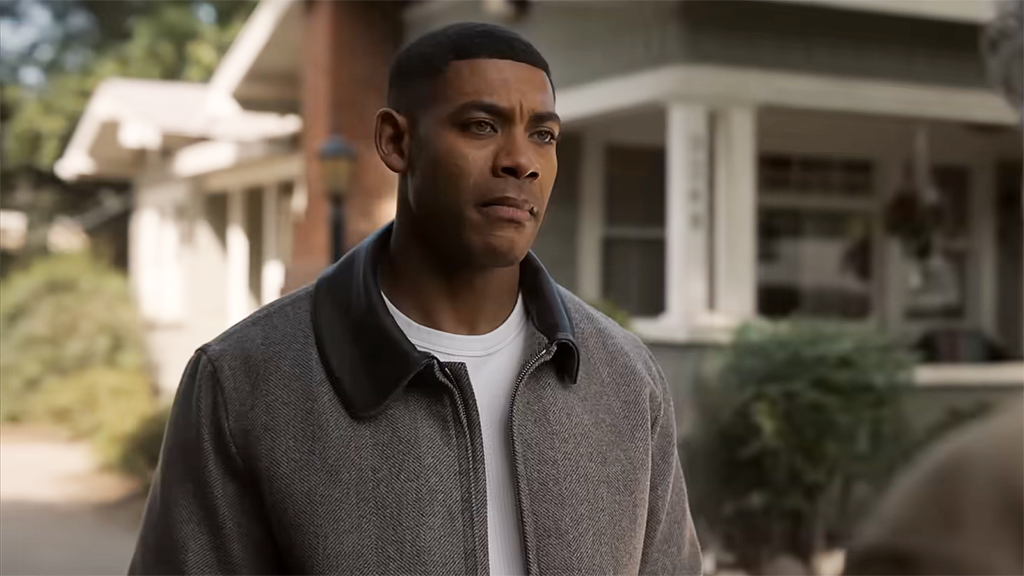
Here’s where my frustration comes in. Some of the reactions we were discussing seemed more focused on being offended by the racial conversations than on explaining a problem with the story.
If you think the show is slow, I hear you. If the parenting scenes put you off, I understand. I had problems with those things myself.
But when the complaint becomes that the family shouldn’t be having those conversations at all, I’m going to push back. I know why parts of that dialogue felt familiar to me.
Sly and I also talked about how exhausting online commentary can become. You keep watching, hoping somebody will consider another perspective, and all you get is another round of the same argument.
I told him I had learned to leave some of that content alone. Watching somebody who continually frustrates you can eat up your whole day without giving you anything useful back.
I’ll speak my mind. I don’t need every reviewer to agree with me. But I’m also not going to borrow somebody else’s reaction and pretend it’s mine.
Hal Jordan’s Death: I’m Not Convinced We Have the Full Story
The apparent Hal Jordan death we discussed is one of the biggest reasons I’m waiting before passing a final judgment.
I wasn’t convinced that the figure shown dead was really Hal, or that the scene meant what it initially appeared to mean. That was my suspicion—not a confirmed reveal.
Something feels like it’s building between Hal and the Guardians. Why don’t they trust him? Why does John seem to be getting positioned to replace him? What does Hal know?
I want answers to those questions.
Kyle Chandler’s performance also gives us a lot to react to. Hal’s attitude is abrasive, and I’m interested in whether the story will give that attitude a purpose beyond making him unpleasant.
A mystery can withhold an answer. Eventually, though, it has to give us one that makes the setup worth it.
My Parallax Theory: Could Hal Become the Villain?
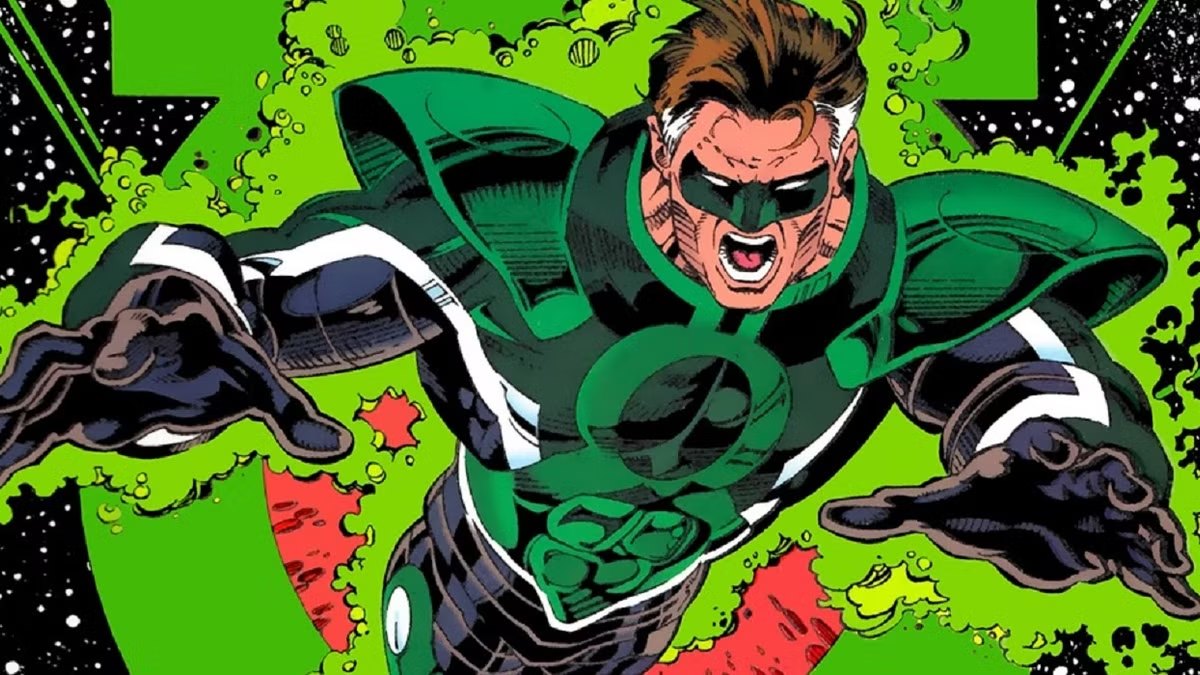
During the conversation, I suggested that Hal might be heading toward a villain turn. We talked about a possible Parallax direction and whether John could end up opposing him.
That was speculation based on how we were reading the show.
I could also imagine Hal going against the Guardians directly, possibly hurting or killing one of them and putting John in a difficult position. Again, that is a theory, not something I’m reporting as a future episode fact.
Sly didn’t want all this tension to end with a simple change of heart and a polite handover of the ring. I understood that concern. If the show is building this much conflict, the resolution needs weight.
I’m expecting a confrontation. If we get it, they need to make it dope.
The Mystery Works for Me, but Where Are the Powers?
I like trying to figure out who is hiding something. I even suspected that a woman connected to John’s storyline might turn out to be a villain. That’s the Scooby-Doo mystery feeling I kept talking about.
But the show also needs to come on with the powers.
They feel sprinkled in here and there. I understand spending time on the people behind the superhero identities. I brought up Iron Man 3 as a comparison for that kind of approach: spending more time with the man than the suit.
Still, I want Green Lantern action. I want the fights and the abilities to give us something memorable.
Episode 2 was especially slow to me. I’m not going to call it fire just because somebody else did. I’m interested in the larger story, but that doesn’t erase the pacing problem I felt while watching.
If the whole season stays slow and goes nowhere, my verdict can change. Right now, I’m waiting to see what this setup delivers.
What About Ryan Reynolds’ Green Lantern Movie?
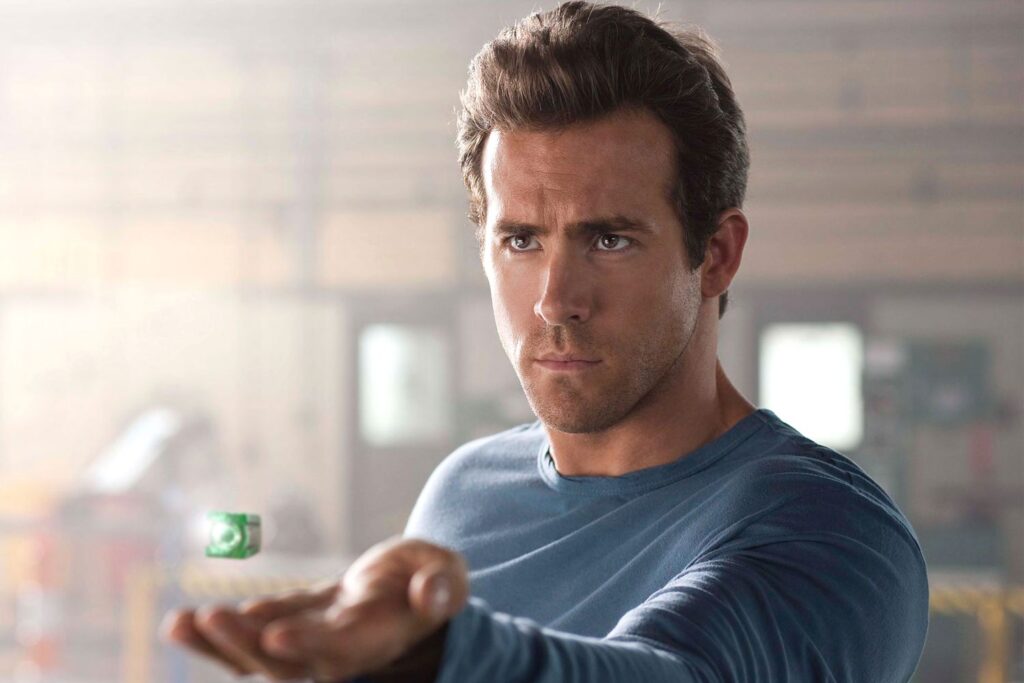
I brought up the 2011 movie because some of the comparisons had me looking sideways at the conversation.
That film had a lot of the familiar Green Lantern characters and imagery people say they want. Now we’re looking at a different interpretation, and suddenly the old movie is being held up as the standard.
Mark Strong’s Sinestro was something we praised. He worked for me in that role.
But the comparison doesn’t settle the question by itself. Familiar visuals and characters still need a story that works. A new approach also has to justify itself.
That’s why I’m curious about Lanterns. I want to see whether this different route leads somewhere worthwhile. I’m not giving it a free pass, and I’m not deciding the ending before I watch it.
Why Familiar Details Matter in Black Stories
Sly raised a question about writers’ backgrounds and how well they understand the lives they’re putting on screen.
My response was that a good writer should be able to understand another perspective, even when it isn’t identical to their own upbringing. That takes observation and care. You have to make the people believable.
We talked about Ryan Coogler and why his work connected with us. We also brought up Friday, Martin, and The Cosby Show while discussing the difference between recognizing a household and seeing a different kind of family represented.
What makes a scene feel real can be a small detail: the way somebody talks, the parent who tells your friend to get out, or a conversation you remember having yourself.
That’s part of what caught my attention in Episode 3. I recognized certain exchanges even while questioning other choices.
Sly also talked about Watchmen, which I said I still needed to watch. His enthusiasm made me interested in checking it out. That was his recommendation, not a review from me of a series I had already finished.
Liking Parts of Lanterns Doesn’t Change My DCU Criticism
I still have major problems with DC’s direction. Sly and I discussed Henry Cavill, Zack Snyder, and opportunities we feel were missed.
Man of Steel is my favorite superhero movie. I loved the opening perspective in Batman v Superman, and I explained how I would have liked a Batman solo film to develop Bruce’s reaction before moving into that clash.
I also brought up Bruce Timm and Paul Dini as creative voices I would look to when thinking about DC storytelling. Those animated versions mean a lot to me.
But all of that can be true while Lanterns interests me. I don’t have to pretend every project gives me the same reaction.
As for a second season, Sly and I discussed whether the show could keep casual viewers interested. We were making predictions. We weren’t confirming a renewal or giving verified audience numbers.
For me, the immediate question is whether this season can deliver the action and story payoff I’m waiting for.
My Verdict on Lanterns Episode 3
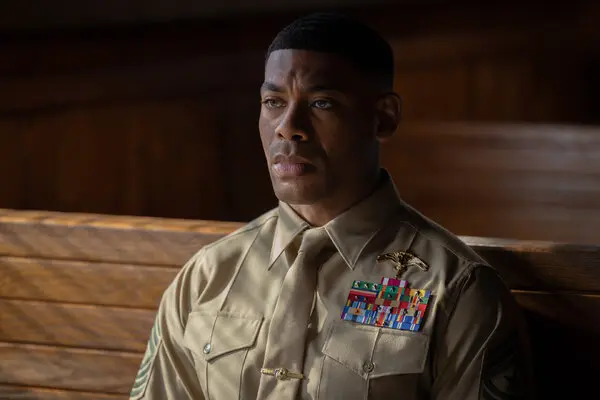
I enjoyed parts of this episode. The family conversations gave me something to recognize. The parents gave me something to question. Hal and the Guardians gave me a mystery I want solved.
I didn’t like the apple scene. I want more powers and better momentum. I’m also not ready to call the entire show hot boo-boo trash just because the internet is arguing.
Let me see where this journey goes.
Watch my full conversation with Supasly75, then tell me in the comments: is the problem the writing, the changes to John Stewart’s origin, or the conversations the episode puts on screen? And do you believe what we’ve been shown about Hal Jordan’s death?
Keep it real. If you disagree with me, tell me why.
Lanterns 1×3 Reaction: Questions and Answers
Does Fatal Jay like Lanterns Episode 3?
I enjoyed parts of it and remain interested in the mystery. I disliked the apple-shooting scene, questioned the family dynamic, and wanted more Green Lantern action.
Why does Fatal Jay defend the family’s conversations about race?
Some of those exchanges reminded me of conversations I heard growing up. That recognition does not mean I approve of the parents’ dangerous training methods.
Does Fatal Jay think Hal Jordan is really dead?
I questioned whether the apparent death tells the full story. That is my theory, not a confirmed explanation of the scene.
Is Hal Jordan becoming Parallax in Lanterns?
We discussed that as a possible direction. The conversation does not establish a confirmed Parallax storyline.
Who joins Fatal Jay in this discussion?
Supasly75 joins the conversation about John Stewart’s origin, Hal Jordan, the fandom backlash, and DC’s live-action direction.